We investigate the molecular and cellular mechanisms by which environmental chemical exposures contribute to human disease using machine learning and multi-modal data.
The Big Problem
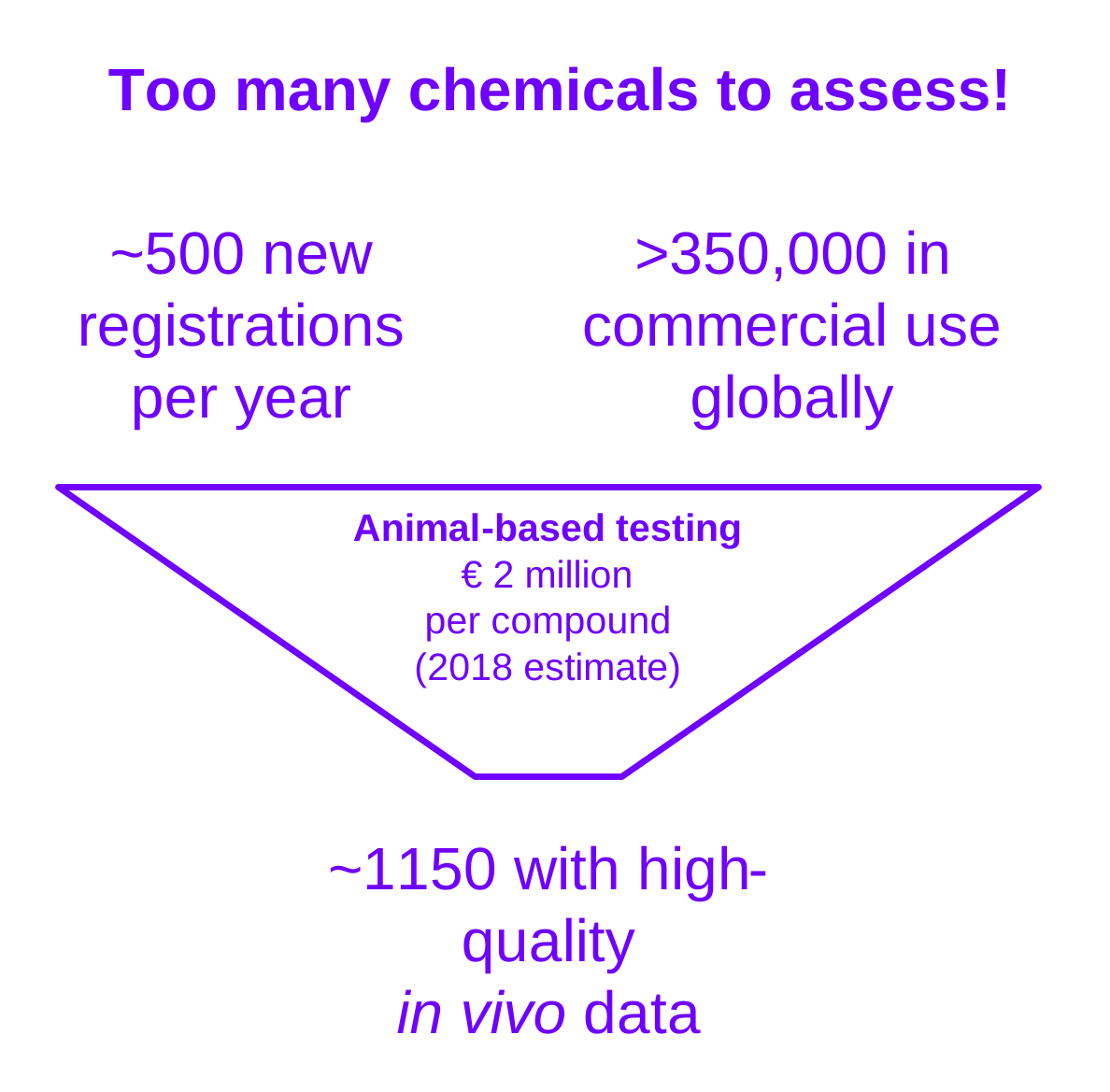
Environmental contaminants cause 16% of premature deaths worldwide, yet most chemicals in commercial use have never been assessed for their potential to impact human health. Traditional chemical safety evaluation methods that use live animals are informative, but too expensive and slow to assess environmental chemical contributions to disease at scale.
A New Paradigm
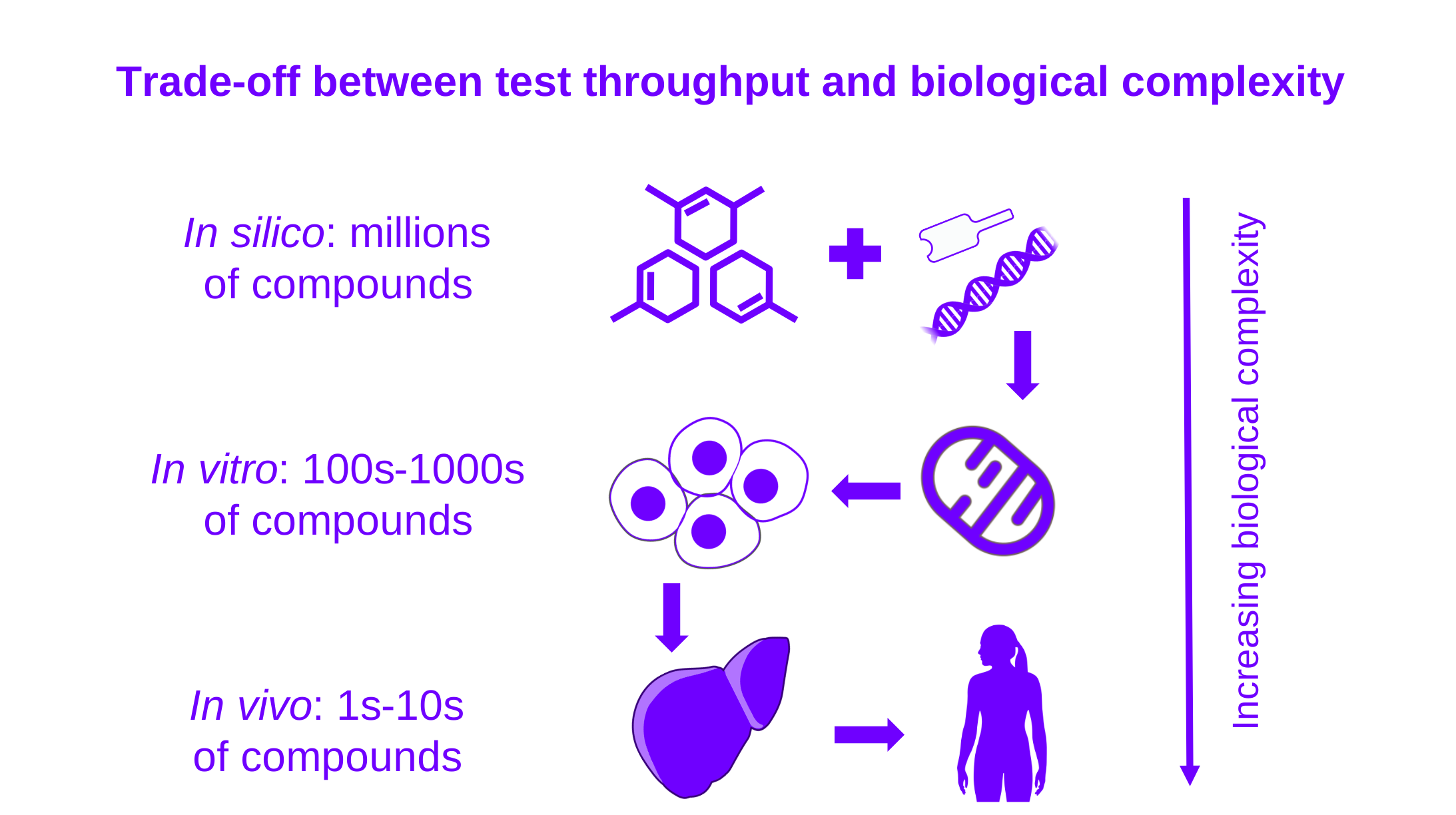
Drug discovery programs routinely screen thousands to millions of compounds in computational and cellular models for their potential to treat disease. What if we used this same technology to assess whether chemicals used in other sectors of society are dangerous? Scientists and government regulators are urgently working to implement high-throughput screening methods to prioritize resource-instensive testing for the most hazardous compounds.
Computational Biology Challenges
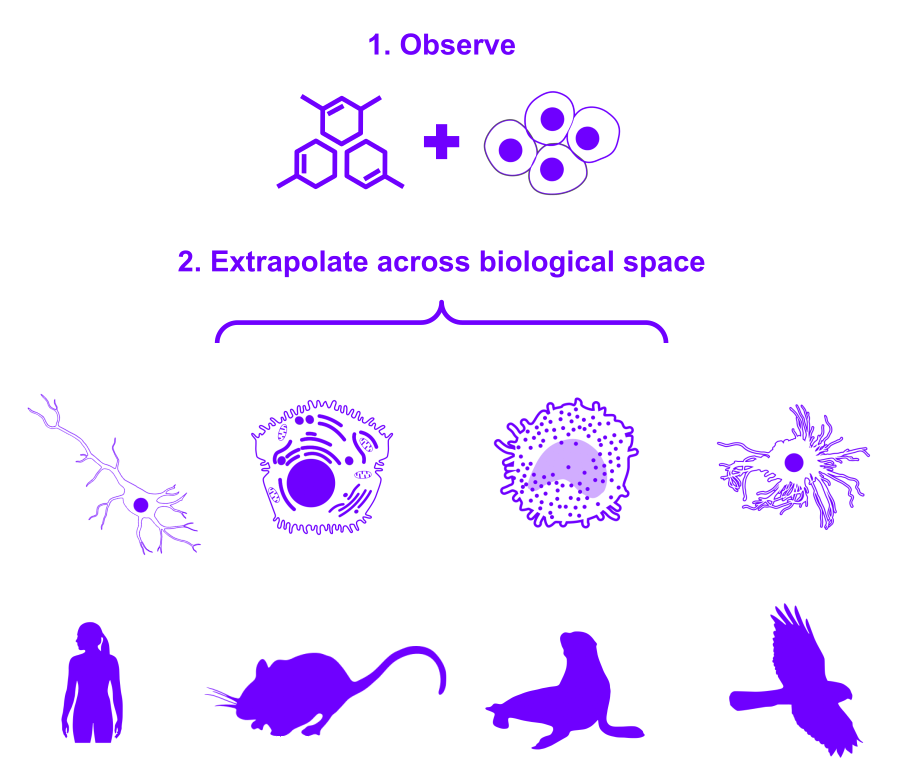
A brute-force approach of testing every compound in all cell types and disease contexts is impractical. Instead, scientists must develop computational approaches that leverage prior knowledge of cell types, cell states, and their relationship to disease to design efficient chemical screens and extrapolate observed perturbations across biological space and scales.
Our Work
Omics data enables us to measure thousands of molecular and morphological features from cells after they are exposed to chemicals. When we measure these data from in vitro cellular assays, we call it “cell profiling”. Using cell profiling data, the Ewald Lab:
-
Estimates the lowest chemical exposure that causes molecular and morphological perturbations in different human tissues for thousands of compounds
-
Predicts how chemicals perturb human biology by analyzing images of exposed cells with machine learning, transfer learning, and multi-omics integration
-
Creates user-friendly web-tools that connect cell profiles to chemical perturbation data from diverse in silico, in vitro, and in vivo sources
We also value collaborating closely with stakeholders across government, industry, and academia to maximize the translational impact of our work.